Consumer demand for sustainable, long-lasting apparel is accelerating fast. Shoppers increasingly want garments doing minimal environmental harm. This profound behavioral shift moves hemp from a niche eco-material directly to a reliable retail staple.
For B2B buyers and boutique owners, sourcing a reliable Women's Hemp Hoodie requires careful navigation. You must balance ideal fabric softness, verify rigid sustainability claims, and maintain highly viable wholesale margins. Choosing the wrong supplier often risks poor garment quality, leading to frustrated customers and dead stock.
This guide provides a direct evaluation framework for sourcing and vetting suppliers confidently. We explore the complex physical and commercial realities of hemp fleece and terry blends. You will learn exactly how to stock premium hoodies seamlessly and profitably.
Key Takeaways
Pure hemp is rarely used for hoodies; optimal comfort and durability are typically achieved through hemp/organic cotton blends (e.g., 55% hemp / 45% cotton).
Validating supplier sustainability requires checking specific material certifications (like OCS or GOTS for the cotton blend components) to avoid greenwashing.
Wholesale pricing for hemp apparel carries a premium, requiring retailers to position these garments as high-durability, low-cost-per-wear investment pieces.
Evaluating a manufacturing partner requires strict scrutiny of MOQs, dye lot consistency, and private label (white label) capabilities.
The Business Case for Stocking Women's Hemp Hoodies
Modern buyers are actively transitioning away from fast-fashion synthetics. They prefer investing in durable natural fibers. Shoppers educate themselves on microplastics and textile waste continuously. Consequently, they seek out clothing offering genuine longevity. Retailers stocking natural fibers capture this growing, eco-conscious demographic effortlessly.
Hemp outperforms synthetic materials across several crucial metrics. Traditional polyester-blend hoodies trap moisture and heat. They also retain odors after minimal use. Conversely, hemp provides natural antimicrobial properties. It breathes exceptionally well. Your customers stay warmer in winter and cooler in transitional months. This dual-action climate control makes the garment highly versatile.
Understanding Customer Lifetime Value (CLV) changes how you view wholesale purchasing. Hemp fibers boast incredible mechanical durability. Instead of degrading or pilling quickly, they soften gradually over time. This unique break-in process creates immense brand loyalty. Consumers rarely return these garments. When they realize the hoodie improves after every wash, they return to buy more colors. Reduced return rates protect your profit margins directly.
| | Chart: Performance Comparison – Hemp Blends vs. Synthetic Blends |
Feature | Hemp / Organic Cotton Blend | Standard Polyester / Cotton Blend |
Breathability | High (Regulates body temperature naturally) | Low (Traps heat and moisture easily) |
Odor Resistance | Excellent (Naturally antimicrobial fibers) | Poor (Retains sweat bacteria) |
Durability | Very High (Fibers soften but do not weaken) | Moderate (Prone to pilling and thinning) |
Environmental Impact | Low (Biodegradable, requires less water) | High (Sheds microplastics into water systems) |
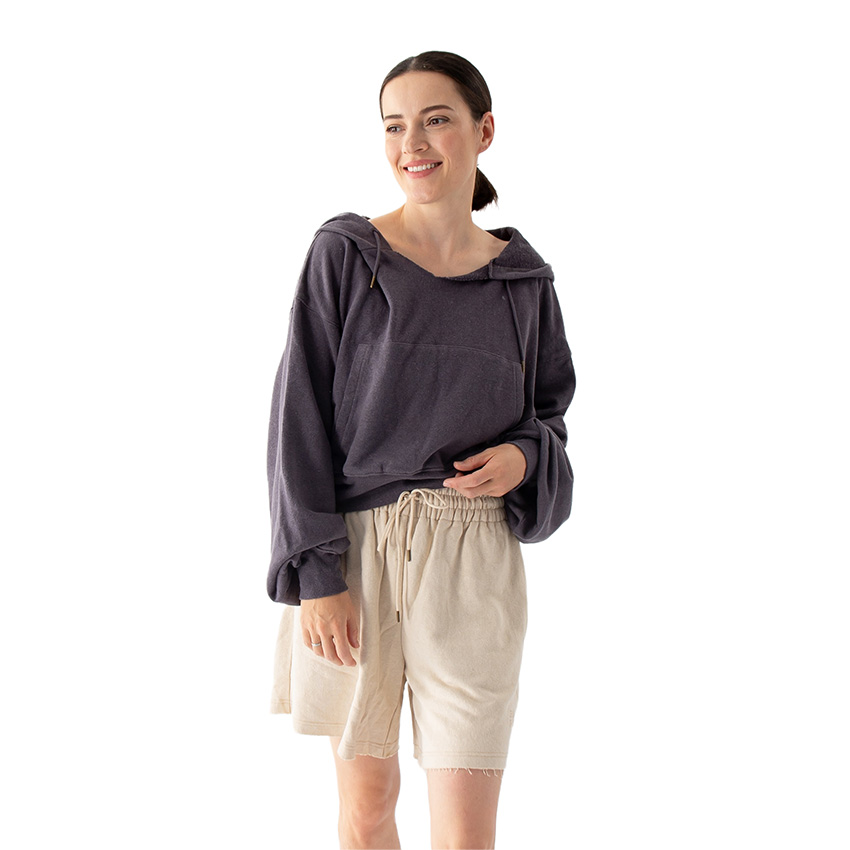
Decoding Fabric Blends and Weights (GSM)
Many buyers mistakenly request a 100% hemp garment initially. This blend reality often surprises them. A pure hemp hoodie feels far too rigid. It mimics heavy canvas rather than cozy fleece. Therefore, industry standards rely heavily on strategic fabric blending.
Combining hemp and organic cotton solves the texture problem entirely. Blends sitting at 55/45 or 60/40 hemp-to-organic-cotton represent the absolute sweet spot. The hemp provides unmatched tensile strength and structural integrity. The organic cotton delivers immediate plushness. Together, they create exceptional French terry or brushed fleece interiors.
Fabric weight dictates the garment's seasonality and perceived value. We measure this using Grams per Square Meter (GSM). You must align the GSM with your target customer's specific needs.
| | Table: Hemp Hoodie GSM Weight Categories |
Weight Category | GSM Range | Best Retail Application |
Lightweight | 200 - 250 GSM | Transitional seasons, cool summer evenings, gym layering. |
Midweight | 260 - 320 GSM | Standard year-round retail staples, everyday casual wear. |
Heavyweight | 330 - 400+ GSM | Premium winter collections, highly structured luxury streetwear. |
Managing customer texture expectations remains critical. When buying a premium Women's Hemp Hoodie, shoppers might notice a slightly crisp initial hand-feel. It differs noticeably from heavily processed synthetic fleece. You must educate them about the "break-in" period. Hemp fibers relax mechanically through wear and washing. Assure your buyers the garment will become their softest wardrobe staple within a few weeks.
Sourcing Ethics: Certifications and Avoiding Greenwashing
Greenwashing plagues the modern fashion industry deeply. Many suppliers claim sustainability without offering concrete proof. As a responsible buyer, you need a strict verification framework. You must audit a wholesale supplier’s environmental claims before signing any purchase orders. Never accept vague terms like "eco-friendly" without requesting official documentation.
Requesting specific certifications guarantees your product meets global standards. Always look for these three primary credentials:
OEKO-TEX Standard 100: This certification ensures no harmful chemicals exist in the dyes or finishes. It guarantees the garment is safe for human skin.
Organic Content Standard (OCS): This standard verifies the exact percentage of organically grown materials present in the final product.
Global Organic Textile Standard (GOTS): Applicable primarily to the organic cotton portion of the blend. GOTS mandates strict ecological and social criteria across the entire supply chain.
Traceability adds another layer of profound trust. Always ask manufacturers about the origin of their hemp raw materials. European hemp crops often follow stricter agricultural regulations than some Asian equivalents. Furthermore, inquire about their retting methods. Dew retting uses natural moisture and is highly sustainable. Water retting uses more resources but speeds up production. Knowing these details allows you to market your items authentically and transparently.
Evaluating Wholesale Suppliers: MOQs, Customization, and Logistics
Finding the right manufacturing partner takes patience. You must evaluate their capabilities realistically. Minimum Order Quantities (MOQs) usually dictate your sourcing path. If you buy standard ready-made blanks, expect MOQs around 50 to 100 units. However, custom cut-and-sew orders demand higher volumes. Factories typically require 300 to 500 units per specific colorway to justify production runs.
Deciding between private labeling and blanks impacts your timeline directly. Buying ready-made wholesale blanks allows fast local screen-printing or embroidery. You can pivot quickly based on seasonal trends. Conversely, full-package overseas manufacturing offers deeper customization. You can dictate unique fits, custom pantone colors, and branded hardware. However, overseas production requires significant capital and long lead times.
Understanding dyeing limitations prevents costly design mistakes. Hemp blends absorb dye quite differently than pure cotton. Factories use either reactive dyes or garment dye processes. Because hemp and cotton take up color at different rates, you often get a slightly heathered or muted finish. This look is highly desirable in eco-fashion. Just ensure you set realistic color expectations internally before approving strike-offs.
Always implement a strict sample testing protocol. Never commit to a bulk order blindly. Follow this exact checklist when receiving your first prototype:
Conduct a Wash Test: Wash and dry the sample three times. Measure it before and after to calculate the precise shrinkage percentage.
Inspect Seam Integrity: Pull firmly on the shoulder and armhole seams. Ensure the stitching uses high-quality, durable thread.
Test Hardware Quality: If the hoodie features a zipper, zip it rapidly twenty times. Look for sticking points or cheap metal finishes.
Evaluate Drawstrings and Aglets: Ensure the hood cords are securely anchored and the tips (aglets) do not easily pull off.
Cost Considerations and Retail Margin Structuring
Selling sustainable apparel requires acknowledging unit cost realities upfront. Wholesale hemp hoodies cost roughly 20% to 40% more to produce than conventional cotton equivalents. Hemp cultivation yields are different. The mechanical processing required to extract the bast fibers takes specialized equipment. These realities drive up the initial factory price.
You must structure your retail pricing carefully to maintain healthy margins. Most successful boutiques use a 2x to 2.5x markup strategy. If your landed cost sits at $35, your retail price should hover between $70 and $88. You can achieve this premium pricing without alienating your target demographic. The key lies entirely in your marketing narrative.
Marketing the premium price point requires shifting the conversation. Move away from the initial ticket price. Instead, frame the purchase around the cost-per-wear ratio. A $40 fast-fashion hoodie might fall apart after ten washes. A $85 hemp hoodie lasts for years.
Additionally, highlight resource-efficient cultivation in your product descriptions. Hemp uses significantly less water than conventional cotton. It requires virtually no pesticides. When customers understand they are buying exceptional longevity and funding responsible agriculture, price resistance drops dramatically. They gladly pay more for verifiable, tangible value.
Conclusion
Sourcing exceptional wholesale hemp apparel demands a meticulous, informed approach. You must prioritize suppliers who offer transparent fabric breakdowns. Demand verifiable ecological certifications to protect your brand reputation. Always seek out partners willing to provide low-MOQ sample runs for rigorous preliminary testing.
Your immediate next step is highly actionable. Reach out to three shortlisted suppliers today. Order a detailed tech pack sample or a blank size run. Conduct your in-house wash and wear testing thoroughly before finalizing any seasonal purchase orders. By controlling the quality upfront, you ensure your retail launch succeeds flawlessly.
FAQ
Q: Do women's hemp hoodies shrink after the first wash?
A: Yes, mild shrinkage is normal. Hemp and organic cotton blends typically experience a standard 3-5% shrinkage rate. Quality manufacturers pre-shrink the fabric rolls before cutting. Alternatively, they adjust their patterns slightly larger to compensate for this expected reduction during the first home wash.
Q: Can I screen-print or embroider on hemp fleece?
A: Absolutely. Hemp blends are highly compatible with both methods. The fabric possesses an incredibly high tensile strength. This makes it particularly excellent for heavy, dense embroidery designs. Screen-printing also yields beautiful results, though water-based inks look best on the natural texture.
Q: How does hemp compare to bamboo in sustainable wholesale apparel?
A: Hemp is significantly more durable and undergoes mechanical processing, retaining its natural strength. Bamboo yields a softer, silkier initial feel. However, standard bamboo viscose requires heavy, toxic chemical processing to break down the pulp. Unless it is explicitly bamboo lyocell, hemp remains the far more eco-friendly choice.
Q: What is the standard lead time for a bulk order of hemp hoodies?
A: Lead times vary based on customization levels. Buying domestic, ready-made blanks usually takes 2-4 weeks for delivery. If you require custom overseas cut-and-sew manufacturing, expect a baseline of 8-12 weeks. This accounts for lab dips, sample approvals, and international freight logistics.


