Investing in natural fibers brings incredible durability and unique style to your wardrobe. Hemp fabric stands out as a premium choice, easily outlasting standard cotton options. Yet, it behaves fundamentally differently than traditional materials. Buyers ready to invest in hemp often miscalculate sizing due to unfamiliarity with the fabric’s drape, initial rigidity, and shrinkage properties. You cannot simply order your usual size and expect a familiar cling. This mismatch leads to frustration and unnecessary returns.
We designed this guide to provide an evidence-based framework for evaluating size charts. You will learn to understand garment cuts and select a fit accommodating the natural break-in process of hemp fiber. Ultimately, this equips you to accurately utilize flat measurements. You can choose a cut minimizing return risks while maximizing long-term garment wear.
Key Takeaways
Hemp fabric lacks the natural elasticity of synthetics; evaluating shoulder seams and chest width via flat measurements is critical for accuracy.
Unblended hemp garments may experience a 3–5% shrinkage rate during the first wash unless explicitly pre-shrunk by the manufacturer.
The fabric's heavier weight (GSM) causes it to drape downward rather than cling, making relaxed cuts highly effective for breathability.
Post-purchase care directly impacts long-term fit; cold washing and air drying are required to maintain the original cut.
1. Understanding Hemp Fabric Dynamics: Why Fit Differs from Cotton
The "Break-In" Period
New hemp t-shirts possess a structural rigidity out of the package. You might notice the fabric feels slightly stiff at first. We advise against expecting immediate, synthetic-like softness upon the first try-on. Instead, the material requires a dedicated break-in period. Over the first five to ten wears, body heat and movement soften the fibers significantly. They relax and mold to your unique body shape. Understanding this initial stiffness prevents you from prematurely returning a garment just because it feels structured initially.
Drape vs. Cling
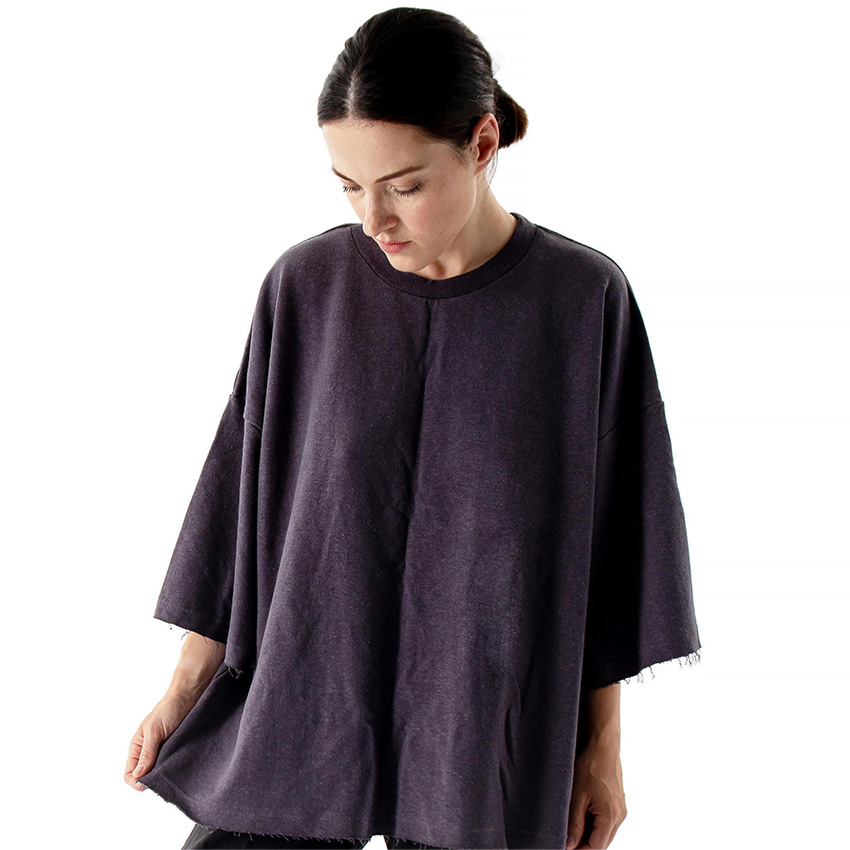
Fabric drape fundamentally alters how a shirt looks on your body. Cotton and elastane blends stretch horizontally to hug your torso. Hemp operates on a completely different physical principle. Its higher density and heavier physical weight pull the fabric downward. It hangs cleanly off the shoulders and chest. It does not stretch to conform to your body. This downward drape flatters most body types. However, you must rely on accurate seam placement to avoid a boxy appearance.
The Shrinkage Factor (Implementation Risk)
Natural fiber contraction is an unavoidable reality. Unless the manufacturer explicitly states they pre-shrunk the item, you must plan for minor changes. Standard shrinkage expectations hover around three to five percent. This contraction primarily affects the vertical length of the garment rather than the horizontal width.
Length Shrinkage: Expect a reduction of roughly half an inch to one inch in the body length.
Sleeve Shrinkage: Sleeves may shorten by up to half an inch.
Width Shrinkage: Chest and shoulder measurements generally remain stable.
You should account for these expected changes during your purchasing decision. Factor them into your preferred final fit.
2. Core Sizing Methodologies: Flat Measurements vs. On-Body Fit
The Flat Measurement Framework
Industry professionals strongly recommend flat measuring over taking on-body measurements. On-body measurements introduce variables like tape tension and posture changes. Flat measuring removes these errors entirely. Instruct yourself to find a currently owned, well-fitting t-shirt. Lay it completely flat on a hard surface. Smooth out any wrinkles. Measure directly across the fabric. This method guarantees a direct apples-to-apples comparison against brand size charts.
Comparison: Flat Measurement vs. On-Body Fit
Measurement Style
Accuracy for Hemp
Common Pitfalls
Flat Measurement
High (Matches brand charts)
Measuring over wrinkles skews numbers.
On-Body Fit
Low (Ignores garment drape)
Holding the tape too tightly inflates size needs.
Key Measurement Zones
Focus your attention on three specific measurement zones to guarantee success.
Chest/Pit-to-Pit: This remains the absolute most critical dimension. Because hemp offers exceptionally low stretch, a chest measurement too small will restrict breathing and movement. Always measure exactly from the bottom of one armpit seam to the other.
Shoulder Width: This measurement prevents rigid fabric from "tenting" at the sleeves. If the shoulder seam falls too far down your arm, the dense fabric creates an unflattering bell shape. Keep the shoulder seam sitting directly on your natural shoulder bone.
Center Back Length: Measure from the base of the back collar down to the bottom hem. Factoring in potential vertical shrinkage after washing ensures the shirt will not expose your waistline later.
Evaluating Size Charts
You must scrutinize brand-provided sizing tables carefully. Identify whether the listed numbers represent the actual garment dimensions or intended body measurements. Most premium brands provide garment dimensions. If a chart specifies "Fits Chest Size 40," it refers to your body. If it specifies "Garment Chest 22 inches," it represents a 44-inch total circumference. Always cross-reference your flat measurements against actual garment dimensions.
3. Evaluating Cuts: Loose-Fit Hemp T-Shirts vs. Tailored Profiles
The Case for Loose-Fit Hemp T-Shirts
Opting for a relaxed silhouette maximizes the inherent benefits of the material. Loose-fit hemp t-shirts excel in warm climates. A relaxed cut perfectly leverages hemp’s thermodynamic properties. The extra space between the fabric and your skin encourages constant airflow. This ventilation naturally regulates your body temperature.
Furthermore, looser cuts effortlessly compensate for the lack of mechanical stretch in the fabric. When you bend or reach, the extra room accommodates your movement. You never feel restricted. The heavy drape ensures the loose fit looks intentional and stylish rather than sloppy.
Tailored and Slim Fits
Some buyers prefer a sharper, closer silhouette. Slim-cut options work beautifully when executed correctly. Consider your layering strategies carefully. If you plan to wear the shirt under jackets or heavy overshirts, a tailored profile prevents bunching. The smooth fabric glides easily under outerwear.
However, you must apply specific sizing logic here. Deliberately size up when selecting a tailored cut. A slim hemp shirt true to your exact body size risks severe seam stress. Sizing up by one increment provides necessary breathing room. It protects the integrity of the shoulder seams and armholes while maintaining a streamlined look.
4. Sizing Considerations for Hemp T-Shirts for Men
Torso Length and Settling
Torso length requires special attention when purchasing hemp t-shirts for men. Manufacturers often cut these garments slightly longer than synthetic alternatives. They do this to anticipate the natural settling process. After the first cold wash, the fibers contract vertically. Evaluating whether you need a dedicated "tall" size depends entirely on your height. If you stand over six feet tall, check the center back length. Ensure it exceeds 28 inches before washing to guarantee adequate coverage afterward.
Sleeve Opening and Bicep Fit
You must assess sleeve drape carefully. Standard cotton ribs expand easily around muscular arms. Hemp will absolutely not stretch around the bicep. It maintains its exact circumference. Therefore, requiring accurate measurement of the sleeve opening is essential for a comfortable fit. Measure the armhole and the sleeve hem of your favorite shirt. Compare these numbers to the size chart to ensure your arms will not feel pinched.
Neckline Construction
Collar durability sets hemp apart from cheaper alternatives. Both crew and v-neck styles utilize reinforced stitching. They maintain their structural shape over years of use. Unlike standard cotton ribs, which permanently warp and bag out, hemp collars remain tight. When pulling the shirt over your head initially, the collar may feel restrictive. It will soften slightly, but it will never lose its intended contour.
5. Sizing Considerations for Women's Hemp T-Shirts
Unisex vs. Female-Specific Cuts
Shoppers often debate between unisex styles and dedicated female silhouettes. Clarifying the structural differences helps you make an informed choice. Sizing down in a unisex block usually provides a boxy, straight-down fit. This works well for streetwear aesthetics. Conversely, buying dedicated women's hemp t-shirts offers tailored structural features. These garments often include bust darts and subtly tapered waists. They accommodate curves naturally without relying on elastane stretch.
Cropped vs. Standard Lengths
The heavier weight of the fabric drastically impacts the hemline of cropped styles. A lightweight cotton crop top flutters and rises easily in the wind. A hemp crop top pulls straight down due to gravity. The hem remains stable and crisp. This weight makes cropped styles feel more secure. However, remember the vertical shrinkage factor. A shirt hitting right at your navel out of the box may shrink slightly above it after laundry day.
Accommodating Body Shape without Stretch
You need specific strategies for choosing a size accommodating your body shape without mechanical stretch. Always fit the widest measurement first. Whether your bust or hips represent your widest point, match the size chart to that number. To prevent looking disproportionately oversized in the shoulders, seek styles featuring drop-shoulder seams. Drop shoulders blur the exact shoulder line. They drape elegantly regardless of your core measurements.
6. Post-Purchase: Managing Fit Longevity and Wash Risks
Washing Realities
You hold the power to dictate how long your garment lasts. Proper washing locks in your carefully chosen fit. We issue clear, uncompromising instructions regarding laundry day. Cold washing is absolutely required. Hot water strips the natural oils from the fibers. It accelerates contraction and ruins the original drape. Use mild detergents. Avoid heavy chemical softeners entirely. Softeners coat the fibers, ruining the natural breathability of the material.
Drying Protocols
Drying methods carry significant risks. High-heat tumble drying destroys natural fibers. The intense heat causes severe shrinkage. It also bakes the fibers, leading to extreme brittleness and premature tearing. Always choose flat drying or line drying. Hanging the damp garment over a smooth wooden rack allows air circulation. Gravity naturally pulls the fibers back into shape as they dry.
Reshaping Damp Garments
Sometimes minor shrinkage occurs even with cold washing. You can easily fix this. We recommend a practical, low-effort technique for reshaping. While the garment remains damp from the wash, lay it on a clean towel. Gently pull the side seams outward. Stretch the bottom hem downward. Manipulate the fabric back to its original flat measurements. The water acts as a lubricant for the fibers. Once the shirt dries completely, it retains the stretched shape perfectly.
Conclusion
Successful garment sizing relies heavily on utilizing precise flat measurements. You must account for minor shrinkage and deeply understand the fabric's natural downward drape. Avoid guessing based on your traditional cotton sizes. Keep the physical properties of natural fibers in mind during your evaluation.
Take action by measuring your favorite, best-fitting t-shirt right now. Write down the pit-to-pit and length dimensions. Compare those exact numbers against the brand’s specific size chart. Finally, decide between a structured tailored profile or a relaxed cut based strictly on your climate and daily use case.
FAQ
Q: Do hemp t-shirts stretch out over time?
A: Hemp may relax slightly during daily wear, conforming comfortably to your body heat. However, it returns entirely to its standard shape after a proper cold wash. Unlike standard cotton or cheap blends, it will not permanently bag out or lose its structural integrity over years of use.
Q: Should I automatically size up when buying a hemp t-shirt?
A: Sizing up is only necessary under specific conditions. Do this if the garment is not pre-shrunk by the manufacturer. You should also size up if you prefer a loose fit but the item features a strictly tailored cut. Otherwise, always defer to your flat measurement chart comparisons.
Q: How much will a 100% hemp t-shirt shrink in the dryer?
A: Heat exposure presents a massive risk. A pure hemp garment can shrink up to a full letter size if subjected to high-heat tumble drying. The intense heat shocks the natural fibers, causing permanent contraction and unwanted brittleness. Always air dry your garments.
Q: Is a hemp-cotton blend easier to size than 100% hemp?
A: Blends introduce much more predictability into the sizing process. The addition of cotton provides familiarity and a slight mechanical stretch. This makes blended fabrics a significantly safer entry point for buyers concerned about navigating strict sizing rules.
We welcome you to join our hemp fashion journey, experience the cool comfort and environmental value of hemp, and jointly support the sustainable development of the fashion industry.