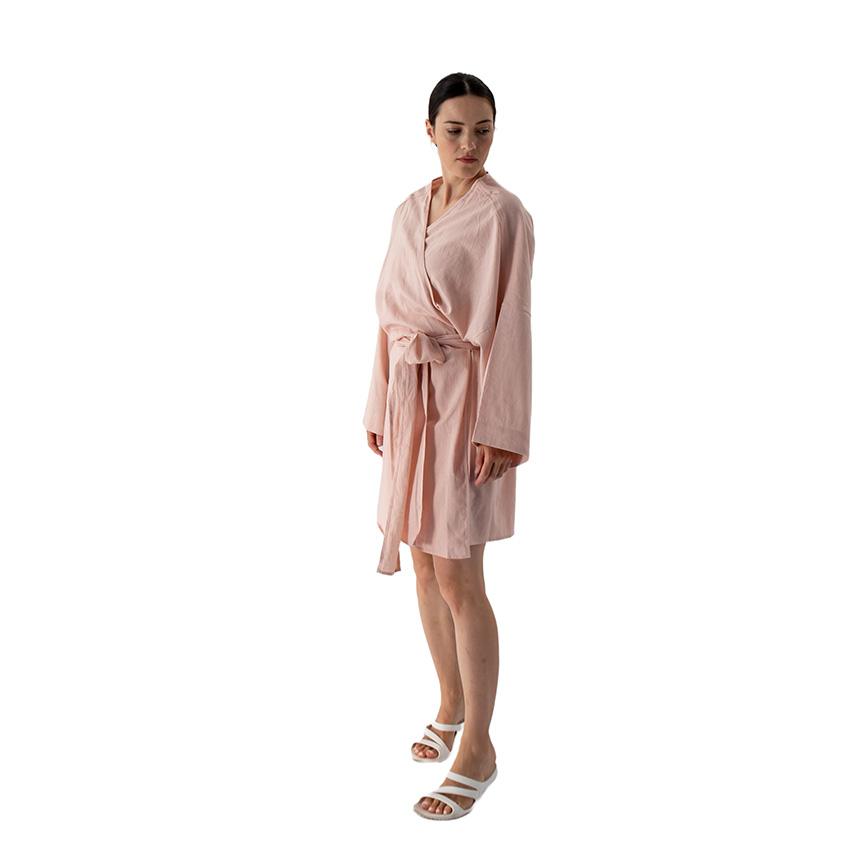
The luxury loungewear market is moving swiftly beyond traditional silk. It is leaving high-maintenance synthetics behind entirely. Consumers increasingly demand wellness-oriented apparel. They want transparently sourced natural fibers. Buyers seek items reflecting their personal values without sacrificing comfort. Enter the Hemp Robe. It stands as the emerging gold standard for sustainable luxury. This premium garment bridges a crucial gap. It connects high-end tactile experiences with rigorous environmental responsibility. Modern production techniques have completely transformed this ancient fiber. Lifestyle brands can now evaluate hemp as a viable addition. It serves as a high-margin asset for any loungewear portfolio. You can adopt this eco-friendly material confidently. It never forces you to compromise on softness, drape, or overall aesthetics. In the following sections, we will explore the complete business case. You will discover exactly how this natural material outperforms conventional options. We will also cover essential sourcing strategies.
Key Takeaways
Market Viability: Hemp offers a compelling "sustainable luxury" narrative, driven by verifiable low-impact cultivation.
Performance Reality: Modern processing renders hemp naturally breathable, highly absorbent, and progressively softer over time, countering outdated "scratchy" myths.
Competitive Edge: Outperforms conventional cotton in durability and longevity, justifying premium price points for lifestyle brands.
Sourcing Caveats: Brands must vet suppliers for ethical processing (avoiding harsh chemical retting) to maintain true sustainability claims.
The Business Case for the Hemp Robe in Luxury Loungewear
Shoppers today actively seek "calm," wellness-aligned apparel. They scrutinize material composition more closely than ever before. Voice of Customer data reveals a massive shift. There is a strong preference for 100% natural, unblended fibers. Buyers want absolute purity in their garments. They want fabrics grown sustainably without hidden plastics. Introducing a premium hemp garment allows your brand to adapt. You capture this growing eco-conscious demographic easily.
Hemp boasts exceptionally high durability over decades of use. This long lifespan effortlessly justifies luxury pricing models. Customers will gladly pay more for pieces built to last. It gives you significantly healthier profit margins. You elevate your catalog above fast-fashion alternatives.
Beyond mere economics, hemp provides a robust brand narrative. It represents a verifiable commitment to regenerative agriculture. Hemp restores vital soil nutrients naturally as it grows. It requires minimal water compared to traditional cash crops. This genuine sustainability acts as a powerful marketing asset. It protects your brand against rising accusations of greenwashing. You offer a physical product grounded in ecological truth. Brands leaning into this narrative build fierce customer loyalty. Buyers want to support companies doing tangible good. A well-crafted hemp garment proves your dedication visually and texturally.
Evaluating the Material: How Modern Hemp Delivers "Soft & Breathable"
Historically, people viewed hemp as rigid or uncomfortably rough. We must address this outdated skepticism directly. The modern softness evolution relies entirely on advanced mechanical processing. Mechanical softening breaks down the plant fibers gently. It avoids the harsh structural damage caused by chemical processing. Today, luxury hemp achieves a beautiful, linen-like drape. The fiber feels elegant and soothing against bare skin.
Thermoregulation represents another major functional selling point. Hemp fibers are highly porous at a microscopic level. This unique structural feature traps air easily and effectively. A spa-style Hemp Robe keeps the wearer wonderfully cool during summer. Conversely, it insulates the body effectively in cold winter months. This versatility makes it a perfect year-round loungewear choice.
Furthermore, hemp excels at advanced moisture management. It absorbs moisture incredibly quickly. It also releases moisture fast, drying out rapidly. The natural fibers resist harmful bacteria and foul-smelling mildew naturally. These inherent antimicrobial properties make it far superior. It outperforms synthetic blends completely in damp environments. You can wear it safely right after a hot bath. It thrives in humid spa settings without degrading.
Best Practices for Material Evaluation:
Request raw fabric swatches processed exclusively via mechanical softening.
Test moisture-wicking speed directly against your current cotton inventory.
Verify all antimicrobial capability claims via certified supplier documentation.
Wash the test samples repeatedly to observe the softening curve.
Material Matrix: Hemp Robes vs. Linen and Premium Cotton
Procurement and product teams need clear evaluation frameworks. They must remain skeptical until the data proves otherwise. We must compare hemp objectively against traditional luxury fabrics. Let us examine how it stacks up against linen. We will also compare it to premium organic cotton to highlight key differences.
Hemp and linen share striking structural and visual similarities. Both offer an elegant, slightly wrinkled, earthy aesthetic. However, hemp generally requires significantly less water to grow. It also yields a much higher tensile strength. This means your garments will resist tearing much better. Hemp simply endures physical stress better than standard linen over time.
Organic cotton often wins on immediate, out-of-the-box softness. Consumers love that instant, plush, cloud-like feel. Hemp requires a brief, albeit necessary, "break-in" period. It softens incrementally and cumulatively over time. Yet, hemp ultimately lasts significantly longer than cotton. It uses a mere fraction of the agricultural water to cultivate.
Some brands hesitate to adopt 100% hemp immediately. Transitionary products offer a safe and profitable middle ground. A blend of 55% Hemp and 45% Organic Cotton works beautifully. This specific ratio delivers immediate softness. It also retains the enhanced durability of the bast fiber. It eases your customers gently into the natural fiber experience.
Feature
100% Hemp
Organic Cotton
Linen
Out-of-Box Softness
Moderate (requires break-in)
High
Moderate
Tensile Strength
Very High
Low to Moderate
High
Water Consumption
Low
Very High
Moderate
Thermoregulation
Excellent (porous fiber)
Moderate
Excellent
Sourcing, Compliance, and Avoiding "Eco-Washing"
Ethical sourcing dictates the true value of your claims. You must understand the complex processing realities deeply. Warn your procurement teams against suppliers using harsh chemicals. Many factories use toxic solvents to speed up retting. Retting separates the fiber from the tough plant stalk. Chemical retting ruins your brand's ecological credibility instantly. We strongly advocate for traditional mechanical retting. Closed-loop enzymatic processes also offer an excellent alternative. These modern methods preserve the surrounding environment. They keep the natural fiber entirely intact and safe for skin contact.
You must demand rigorous certifications from your manufacturing partners. These industry-standard lenses ensure product safety and integrity. Never compromise on verified environmental compliance.
GOTS (Global Organic Textile Standard): This standard ensures the plant grew organically. It restricts toxic bleaches, heavy metals, and dyes during manufacturing.
OEKO-TEX® Standard 100: This guarantees the finished garment contains zero harmful substances. Laboratories test every thread, button, and zipper thoroughly.
Fair Trade Certification: This confirms workers received fair wages. It proves ethical labor practices across the global supply chain.
Supply chain transparency remains a non-negotiable requirement today. The modern luxury consumer expects absolute clarity from brands. Trace your fiber back to the specific farm level. Documenting the precise origin prevents greenwashing accusations completely. It builds deep, lasting trust with your educated buyers.
Common Mistake to Avoid: Relying solely on a generic "natural" label. You must check the underlying processing chemicals. Natural fibers processed synthetically lose their environmental value entirely.
Implementation Realities: Managing Consumer Expectations & Care
Launching a 100% natural product requires strategic customer education. You must manage consumer expectations proactively from day one. Be entirely transparent about the inherent wrinkling of raw hemp. Do not frame this natural characteristic as a defect. Instead, market it as a hallmark of relaxed luxury. It shows the fabric is pure, breathable, and untreated. Visual texture adds authentic character to the garment.
Next, educate your audience about the essential break-in period. Let them know exactly what to expect initially. Hemp fabrics soften cumulatively with every single wash cycle. Set this expectation early on the product page. The peak tactile experience develops gradually over many months. The fabric eventually molds to the wearer beautifully.
Provide concrete wash guidelines to preserve fiber integrity. Proper care aligns perfectly with the sustainable lifestyle ethos. It prevents unnecessary returns and customer dissatisfaction.
Water Temperature: Always use a gentle cold wash cycle. Hot water stresses the natural plant fibers needlessly.
Detergent Choice: Apply mild, plant-based natural detergents. Strictly avoid harsh chemical brighteners or synthetic fabric softeners. They coat the porous fibers, destroying breathability.
Drying Method: Air dry the garment whenever possible. If using a machine, choose a low tumble setting. High heat weakens the woven structure over time.
Ironing: If customers desire a crisp look, advise warm ironing while the fabric remains slightly damp.
Conclusion
A premium Hemp Robe represents a highly strategic investment. It elevates sustainable lifestyle brands above the crowded competition. It offers unmatched durability and supreme environmental credibility. Consumers gain a wonderfully unique, deeply comforting textural experience. You gain a high-margin product remarkably resistant to passing fashion trends. To begin this worthwhile transition, take actionable steps today. First, request raw fabric swatches from certified, vetted suppliers. Second, audit their environmental certifications rigorously for full compliance. Finally, consider prototyping a small, exclusive capsule collection. Test the waters with your core audience before scaling up. This deliberate, calculated approach ensures uncompromising product quality. It aligns perfectly with modern luxury standards and wellness values.
FAQ
Q: Does a 100% hemp robe shrink after the first wash?
A: Yes, natural fibers experience minor shrinkage during the first wash. Most unblended hemp garments shrink by approximately 3% to 5%. To minimize this, we recommend washing the garment in cold water and air-drying it. High-quality luxury brands usually pre-wash or pre-shrink their fabrics during manufacturing. Always check the specific care label.
Q: Why are hemp robes generally more expensive than organic cotton?
A: Hemp requires a highly labor-intensive cultivation and processing pipeline. Separating the strong bast fibers from the plant stalk takes specialized mechanical equipment. Additionally, spinning and weaving the durable fibers requires specific, slower machinery. This complex manufacturing process increases production costs. However, the superior longevity of the fabric offsets this initial price over time.
Q: Is a hemp-cotton blend better for a luxury feel?
A: It depends heavily on consumer preferences. A blend offers excellent immediate softness straight out of the box. It feels plush instantly. However, a pure hemp garment provides unmatched long-term durability and superior breathability. It softens cumulatively over time. Blends act as a great transitionary piece for buyers hesitant about pure bast fibers.
Q: How long does it take for a hemp robe to fully soften?
A: A pure hemp garment usually requires three to five wash cycles to lose its initial stiffness. The mechanical action of washing and wearing breaks down the microscopic natural resins. Peak softness typically develops after several months of regular use. The fabric eventually achieves a beautifully fluid, custom-draped feel.
We welcome you to join our hemp fashion journey, experience the cool comfort and environmental value of hemp, and jointly support the sustainable development of the fashion industry.