The activewear market is undergoing a massive pivot today. Consumers recognize modern performance wear often acts as a chemical sauna. Synthetic fabrics trap heat and bacteria relentlessly. They expose open pores to dangerous compounds and PFAS during intense workouts. B2B retailers and corporate buyers face a serious sourcing challenge. You must find sustainable alternatives rapidly. However, you cannot sacrifice durability, visual appeal, or brand margins. We need real manufacturing solutions, not just clever green marketing. Integrating the Hemp Half Zip Hoodie into your inventory offers a verifiable, high-performance answer. It completely satisfies eco-conscious demand while cutting through rampant industry greenwashing. You gain a highly versatile layering piece ideal for diverse target markets. Upgrading your product lineup protects consumer health and secures your long-term brand reputation. Read on to discover the specific material benefits and merchandising strategies driving this apparel revolution.
Key Takeaways
Consumer demand is shifting away from polyester due to health (toxin absorption during workouts) and environmental (microplastics) concerns.
Hemp offers superior tensile strength, natural antimicrobial properties, and a significantly lower water footprint compared to conventional cotton.
The half-zip silhouette provides high utility for both athleisure and corporate merchandising, bridging the gap between performance and casual wear.
Optimal retail success requires sourcing specific hemp-cotton blends (e.g., 55% hemp / 45% organic cotton) to balance durability with immediate tactile softness.
Transparent supply chains (GOTS, OEKO-TEX certifications) are critical for mitigating risk and defending premium price points.
The Market Shift: Mitigating Risk in Synthetic Activewear Inventory
The "chemical sauna" effect presents a massive liability for modern apparel retailers. Shoppers actively push back against garments made entirely of synthetic fibers. They heavily scrutinize polyester, nylon, and spandex materials. During physical exercise, human pores naturally open to release excess body heat and sweat. This biological cooling process increases skin susceptibility significantly. The skin readily absorbs chemical moisture-wicking treatments, synthetic dyes, and per-and polyfluoroalkyl substances (PFAS). Manufacturers often use these forever chemicals to create water-resistant or sweat-wicking properties. Buyers now demand non-toxic workout gear to protect their physical health. They refuse to compromise their skin barrier for artificial performance enhancements.
Environmental scrutiny adds intense pressure to the retail landscape. Synthetic garments carry severe, undeniable lifecycle liabilities. They shed microscopic plastic fibers during every single washing cycle. These tiny microplastics easily bypass standard municipal water filtration systems. They enter local waterways, oceans, and ultimately the global food chain. Discarded synthetic clothing also causes severe long-term soil contamination when it reaches landfills. It takes hundreds of years for polyester fabrics to degrade fully. Modern consumers understand this devastating environmental toll. They actively audit their own closets to remove polluting garments.
Retailers must pay close attention to this shifting consumer behavior. Brands relying solely on traditional synthetics risk major public backlash. They alienate a rapidly growing demographic of health-conscious and environmentally educated consumers. Transitioning your inventory to natural performance fabrics is no longer a niche marketing differentiator. It represents a strict baseline requirement for modern apparel brands. Retail buyers must secure inventory reflecting these updated consumer values. Failure to adapt leaves your business holding toxic inventory nobody wants to purchase.
Hemp boasts incredible structural advantages over traditional apparel fibers. Historically, textile experts note hemp fibers are up to eight times stronger than standard cotton. Retail buyers constantly worry about garment lifespan and expensive customer return rates. Hemp directly addresses these bottom-line concerns. The dense natural fibers resist stretching out of shape over time. Garments hold their tailored structure even after years of intense athletic use. Shoppers appreciate clothing enduring rigorous gym sessions without losing structural integrity.
Hemp also naturally excels at bodily moisture management. The porous fibers regulate body temperature exceptionally well. They allow optimal airflow to reach the skin. Furthermore, hemp inherently resists harmful bacteria and mildew accumulation. Manufacturers do not need to apply toxic chemical finishing agents to achieve these results. We can easily contrast this natural performance against conventional polyester. Synthetic fibers aggressively trap sweat and breed odor-causing bacteria. This causes garments to smell permanently sour over time. Hemp keeps wearers feeling fresh naturally, reducing the need for constant laundering.
Pure hemp can sometimes feel overly rigid or coarse initially. We highly recommend actionable procurement strategies for the best retail reception. You should mandate the 55/45 rule when sourcing inventory. Always look for a specific blend containing 55% hemp and 45% organic cotton. A mid-weight option, roughly 7 ounces, works perfectly for layering. This exact ratio delivers hemp's robust structural integrity seamlessly. It also provides the necessary drape, immediate tactile softness, and lived-in aesthetic consumers expect.
Performance Metric | 55% Hemp / 45% Organic Cotton | 100% Conventional Polyester |
Durability & Strength | Exceptionally high; resists stretching and tearing over time. | Prone to pilling, snagging, and eventual structural degradation. |
Odor Control | Naturally antimicrobial; actively resists odor-causing bacteria. | Traps bacteria in synthetic fibers; retains permanent odors. |
Skin Health | Breathable and non-toxic; safe for open pores during sweat. | Creates a "chemical sauna"; leaches PFAS and synthetic dyes. |
Environmental Impact | Biodegradable, enriches soil, requires minimal water usage. | Sheds microplastics into oceans; sits in landfills for centuries. |
Tactile Experience | Gets progressively softer and more comfortable with every wash. | Maintains a static, artificial plastic feel throughout its lifespan. |
Silhouette Versatility: Merchandising the Half-Zip for Multiple B2B Channels
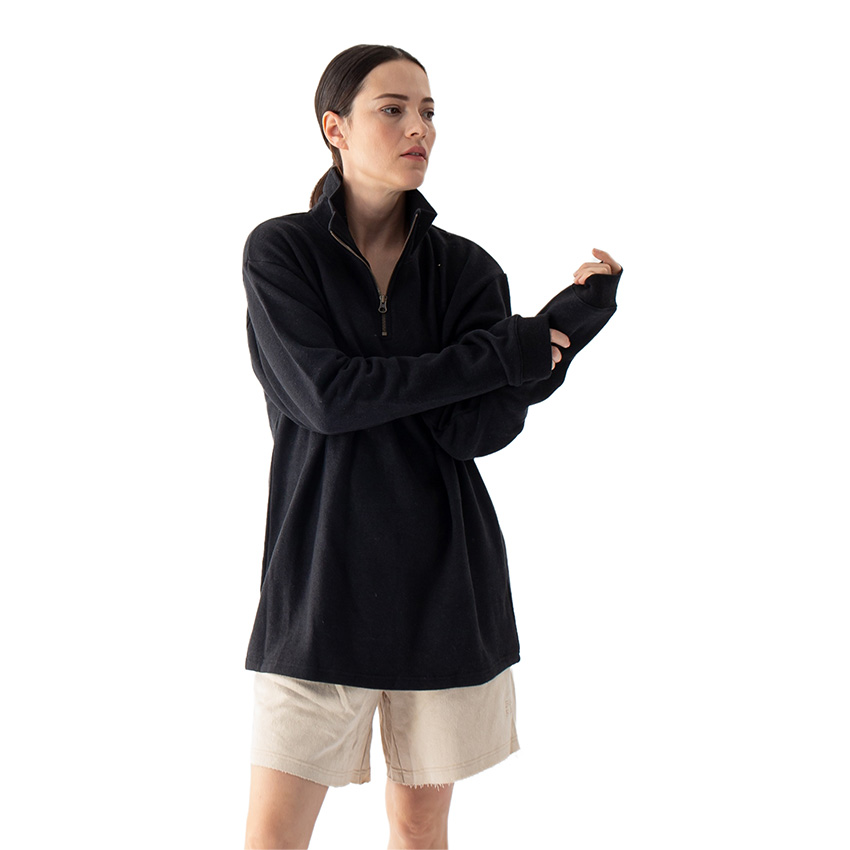
The half-zip silhouette acts as the ultimate transitional layering piece. It seamlessly takes users from the yoga studio straight to the street. Consumers highly value functional, crossover design elements in their activewear. Structured collars provide a polished look elevating the garment beyond basic gym clothes. Removable hoods offer critical weather adaptability for outdoor runners. Tech pockets keep modern devices secure during intense physical movement. You can merchandise these features to highlight the garment's daily utility. Shoppers gladly invest in items serving multiple lifestyle purposes simultaneously.
Corporate gifting programs represent a highly lucrative B2B channel for this silhouette. You must frame the half-zip as a premium alternative to standard, shapeless crewnecks. It perfectly fits the modern remote work wardrobe requirements. Employees want comfortable yet presentable clothing for video calls. Corporate retreat profiles also demand comfortable, unified team apparel. The tailored half-zip provides a professional, cohesive look effortlessly. Furthermore, it directly aligns with corporate ESG (Environmental, Social, and Governance) goals. Companies aggressively seek gifting items reflecting their public sustainability commitments.
Inclusive grading drives modern retail success across all demographics. You must accommodate varying body types seamlessly to maximize sales volume. We strongly recommend sourcing styles featuring tailored but unrestricted fits. Look for advanced pattern-making techniques incorporating wetsuit-inspired paneling. These specific design choices prevent the garment from looking boxy or unflattering. They ensure clean, streamlined silhouettes across your entire size run. Thoughtful fit architecture reduces customer returns and builds fierce brand loyalty.
Supply Chain Verification: Defining Your Sourcing Criteria
Retail buyers need a solid framework for vetting overseas suppliers. Remember, terms like "eco-friendly" or "green" are merely unregulated marketing jargon. True sustainability requires rigorous, verifiable proof points from independent third parties. Look for globally recognized certifications validating non-toxic production methods. The Global Organic Textile Standard (GOTS) ensures organic origins and strict chemical restrictions. OEKO-TEX Standard 100 guarantees the final product contains absolutely no harmful substances. Fair Trade certification verifies ethical labor practices and fair wages throughout the manufacturing journey. You must demand these official documents upfront before signing any purchase orders.
You must scrutinize the supplier's dyeing and finishing processes carefully. The final manufacturing stages often introduce hidden toxins into otherwise natural garments. Conventional synthetic dyes frequently contain dangerous heavy metals like lead and cadmium. Natural or low-impact earth-tone dyes work best for hemp apparel. They complement hemp's organic, earthy narrative beautifully. This crucial sourcing choice prevents the introduction of dangerous chemicals into the finished apparel. Shoppers actively seek out skin-safe, naturally dyed layers for their daily wardrobes.
To implement an effective vetting process, adopt a strict supplier checklist. Your procurement team should evaluate potential partners using the following criteria:
Raw Material Traceability: Can the supplier trace the hemp back to the specific agricultural farm?
Chemical Audits: Does the factory possess recent OEKO-TEX testing results for the specific fabric blend?
Water Management: Does the facility utilize closed-loop water systems to prevent local river pollution?
Labor Transparency: Are there clear, verified reports ensuring no forced labor or unsafe working conditions exist?
Packaging Protocols: Do they ship the final products in biodegradable or recycled materials instead of virgin plastic polybags?
Implementation Strategy: Rollout and Customization for Retailers
You need reliable B2B customization options when selling to corporate clients. The dense, durable weave of mid-weight hemp provides excellent structural stability. It acts as an exceptionally stable backing for heavy corporate embroidery. High-stitch-count logos look crisp, clean, and highly professional. You easily avoid the unsightly fabric puckering commonly seen on thin synthetic polo shirts. Screen printing also works well on this natural canvas. However, premium embroidery elevates the tactile feel and matches the garment's high-end positioning. Corporate buyers happily pay a premium for flawless logo execution.
Do not execute a sudden wholesale dumping of your current synthetic stock. We advise a much more strategic, phased inventory approach. Introduce the new garment as a special "Premium Sustainable Capsule Collection." This targeted method allows you to test audience appetite safely. You can gauge consumer price elasticity without risking major capital upfront. Monitor the sell-through rates and customer feedback meticulously. Use this localized data to inform your larger purchasing decisions for the following fiscal year.
Consumer education prevents initial friction inside the fitting room. Retailers must proactively communicate hemp's unique tactile properties to the end-user. Let your customers know the natural fabric actually evolves over time. It gets progressively softer and more comfortable with every single wash cycle. Clear retail signage, detailed product descriptions, or informative hangtags can explain this break-in process. Informed customers appreciate the durable, lived-in quality of premium natural fibers. They understand they are purchasing a long-term wardrobe staple, not fast fashion.
Conclusion
Transitioning your inventory to sustainable natural fibers is a strategic necessity for modern apparel brands.
Adopting women's hemp half-zip hoodies actively protects consumer health while aligning with verifiable sustainability metrics.
This eco-conscious merchandise shift secures higher-margin, incredibly durable product lines for your retail business.
Audit your current layering apparel inventory immediately to identify synthetic material liabilities.
Contact potential manufacturing partners to request physical fabric swatches and updated environmental certification documentation today.
FAQ
Q: Does a hemp half zip hoodie shrink after the first wash?
A: Minimal shrinkage occurs if properly pre-shrunk by the manufacturer. We strongly recommend sourcing blends stipulating pre-washing during production. You should advise end-users to wash the garment in cold water and air dry it. This simple care routine maintains the fiber's structural integrity and prevents unexpected sizing issues.
Q: How does the wholesale cost of hemp compare to organic cotton?
A: Hemp generally commands a slight price premium over standard organic cotton. This stems from specialized agricultural harvesting and complex decortication processes required to extract the fibers. However, hemp's superior durability and extended lifespan easily justify a higher retail price point for your customers.
Q: Can hemp activewear be effectively branded with our company logo?
A: Yes. Hemp blends provide a highly stable, dense canvas for corporate customization. We highly recommend embroidery over traditional screen printing. Embroidery perfectly matches the premium, textured aesthetic of the natural fabric. It ensures long-term logo visibility without cracking or peeling over time.
Q: Is hemp clothing scratchy or uncomfortable for athletic wear?
A: While raw industrial hemp feels coarse, apparel-grade hemp undergoes specialized finishing processes. When blended with organic cotton, typically in a 55/45 split, the fabric becomes immediately soft. It provides excellent comfort for athletic wear and becomes progressively softer with routine household washing.


