Let us work together to contribute to the green future of the earth!

Views: 0 Author: Site Editor Publish Time: 2026-10-08 Origin: Site


Designers and apparel brands face a persistent challenge in today's fashion industry. You must balance ambitious sustainable material goals against the rigorous technical demands of garment construction. Finding this equilibrium often feels overwhelming during the initial sourcing phase. Fortunately, modern processing methods have completely transformed the textile market. We must abandon the outdated assumption portraying all hemp as stiff or canvas-like. Today, textile producers create incredibly diverse fabrications tailored specifically for high-end apparel.
This article provides a technical, decision-stage framework for your sourcing needs. You will learn how to accurately match specific Hemp Textiles to the correct dress silhouette. We will guide you through ensuring product viability, maintaining your specific aesthetic intent, and actively minimizing production waste on the cutting room floor.
100% woven hemp requires structural silhouettes (shift, A-line) to accommodate its natural rigidity and lack of elasticity.
Hemp jersey fabric is mandatory for form-fitting or draped knit silhouettes, but requires careful evaluation of stretch recovery to prevent bagging.
Flowing and bias-cut dresses demand hemp blends (e.g., Hemp/Tencel or Hemp/Silk) to achieve the necessary drape without excess bulk.
Mitigating production risks requires mandatory pre-washing sample yardage, as hemp textiles typically experience a 5–10% shrinkage rate.
You must understand the baseline properties of hemp before drafting any patterns. Hemp fibers possess incredible tensile strength. This makes them highly durable for everyday wear and extensive laundering. The material also offers exceptional breathability. Your customers will feel comfortable even in humid climates. However, pure hemp features incredibly low natural elasticity. The fibers do not stretch easily under tension. They also exhibit a high crease propensity. You must plan for wrinkles in high-mobility areas like the elbows and waistline.
Pattern drafting relies entirely on understanding natural stretch. Without inherent elasticity, fabric weight dictates the overall garment fit. A severe mismatch between fabric weight and your pattern blocks causes serious failures. Heavy materials applied to tight blocks severely restrict wearer movement. Customers will quickly return these poorly fitted garments. You must map the material properties directly to your structural intentions.
Hemp Drape vs. Structure Matrix
Fabric Weight (GSM) | Composition | Drape Quality | Required Pattern Ease |
|---|---|---|---|
150 - 250 (Mid-Heavy) | 100% Pure Hemp | Rigid and Crisp | High (Requires structural ease) |
130 - 200 (Mid-Light) | Hemp / Spandex Blend | Contouring | Negative (Fitted blocks) |
Under 130 (Light) | Hemp / Tencel Blend | Fluid and Soft | Moderate (Draped blocks) |
You must also frame the business decision regarding pure versus blended fibers. Marketing pure, unblended hemp appeals strongly to eco-conscious consumers. It offers an uncompromised sustainability narrative. Yet, pure hemp severely limits your design flexibility. Blending it introduces vital physical capabilities. Adding organic cotton softens the hand-feel immediately. Incorporating elastane provides much-needed stretch for modern fits. Introducing lyocell improves the overall fluidity. You must balance aggressive marketing claims against actual commercial viability.
Designers often favor shift, sheath, and pinafore dresses for professional collections. You should select mid-to-heavyweight pure woven hemp for these shapes. Target a weight between 150 and 250 GSM. Hemp-linen blends also perform beautifully here. These specific materials deliver crisp architectural lines. They hold darts and deep pleats exceptionally well. This creates a very refined, expertly tailored appearance on the hanger.
However, specific design limitations exist. Woven hemp remains highly prone to wrinkling. Flex points around the hips and waist suffer the most structural distortion. You must incorporate generous ease into the pattern. Otherwise, precise tailoring becomes absolutely essential. Tight fits lacking ease will restrict wearer movement entirely. Common mistake: Do not draft zero-ease blocks using pure woven materials. The garment will simply tear at the stress seams.
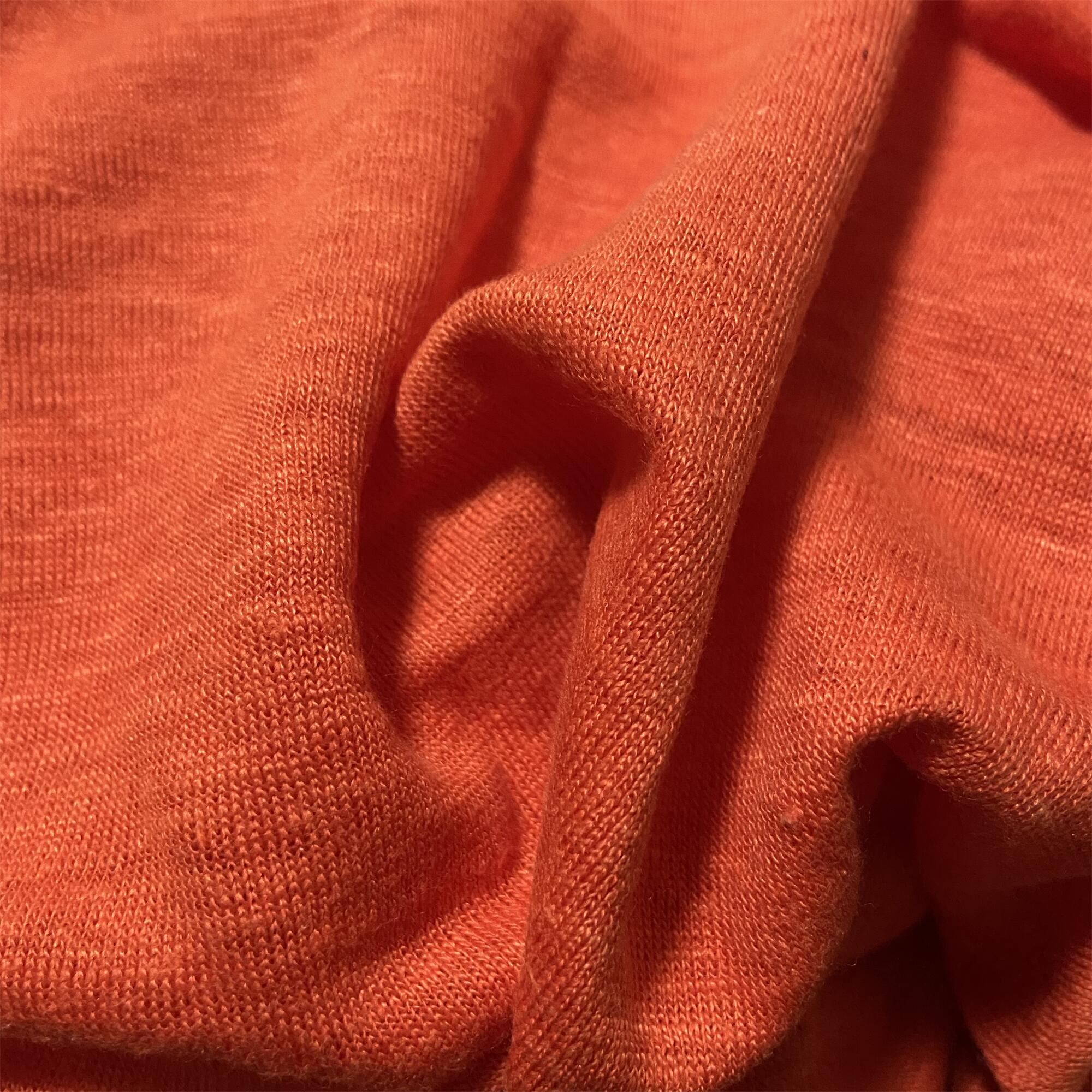
Bodycon, wrap, and t-shirt dresses require significant elasticity. You cannot achieve these hugging shapes using rigid wovens. Hemp Jersey Fabric serves as the mandatory selection here. Look for blends incorporating organic cotton and spandex. Target a weight range of 130 to 200 GSM. This provides the necessary mechanical stretch. It ensures absolute comfort and proper body contouring. The garment retains high breathability throughout prolonged wear.
Pure hemp jersey exhibits remarkably poor stretch recovery. Industry professionals call this poor material "memory." Garments can stretch out of shape very quickly. They might bag at the knees or elbows after just one wear. You must evaluate your suppliers specifically for their blending ratios. Proper spandex integration prevents this bagging effect completely. Best practice: Always request recovery test data from the mill. Ensure the material snaps back to its original dimensions after tension testing.
Maxi dresses, slip dresses, and bias-cut gowns demand absolute fluidity. You need lightweight blends remaining under 130 GSM. Excellent choices include silk, viscose, or Tencel combinations. These pairings achieve beautiful fluid movement. They offer an incredibly soft hand-feel against the skin. Many blends also provide an elevated visual luster. This makes them perfect for evening wear or resort collections.
Using unblended material usually fails for these delicate designs. Pure fibers remain too stiff for tight gathers. They vigorously resist the fluid drape required by bias cuts. Blends are entirely non-negotiable in this category. Be aware this choice directly impacts your marketing narrative. You cannot claim purely unblended status when sourcing Hemp Fabric for Dresses designed for drape. Transparent communication regarding blending keeps consumer trust high.
Documenting shrinkage tolerances is critical for successful production. Hemp experiences a notoriously high shrinkage rate compared to synthetics. Expect up to a 10% reduction upon the first commercial wash. You must mandate pre-shrinking during the early production phase. Never cut dress patterns from unwashed, raw yardage. Doing so guarantees severe sizing failures later in the supply chain.
Dye affinity requires careful consideration. The fibers absorb reactive dyes incredibly well during processing. The material takes on rich, vibrant hues initially. However, dark colors experience noticeable fading over time. Blacks and deep navies lose intensity faster than lighter pastel shades. The fiber's rigid cellular structure causes this gradual color loss. You must carefully evaluate colorfastness test reports before ordering.
Seam slippage poses another serious garment construction risk. Loosely woven textiles fray very easily under tension. Unlined dresses require specific finishing techniques to survive daily wear. You should mandate French seams for all lightweight variants. Bound edges work perfectly for heavier weights. These techniques prevent garments from falling apart at the seams. Do not rely on simple overlock stitching for unlined luxury garments.
Cutting room realities require significant attention from your production managers. Heavy fibers resist standard cutting blades aggressively. They dull equipment much faster than cotton or synthetic alternatives. You must schedule frequent blade sharpening for bulk lays. Dull blades cause frayed edges and highly inaccurate pattern pieces. Manage your ply heights conservatively. Do not stack heavy weaves too high on the cutting table.
Analyze your cost-per-yield carefully during the planning phase. Premium textiles carry a noticeably higher upfront cost per yard. You must compare this against the garment's expected longevity. High-quality natural fibers support a premium retail pricing model very well. Eco-conscious consumers willingly pay more for certified durability. Do not compromise on fabric quality simply to save minor upfront costs.
Care label compliance minimizes post-purchase consumer complaints. You must provide accurate, highly visible consumer care instructions. Advise customers to avoid high-heat tumble drying completely. Excessive heat causes the natural fibers to become brittle. Brittleness leads directly to premature tearing and excessive lint shedding. Recommend cold washing and line drying whenever possible to extend garment life.
Requesting the right sample yardage prevents costly manufacturing mistakes. Do not rely on tiny five-by-five inch swatches. They provide zero insight into how the material actually behaves. You should order a minimum of three to five yards. Drape this yardage over a dress mannequin in your studio. Run the sample through a full wash, dry, and iron cycle. Observe exactly how the physical structure changes.
Look critically beyond basic greenwashing claims. Verify actual certifications before signing large purchase orders. Require verifiable documentation for GOTS (Global Organic Textile Standard). Demand OEKO-TEX Standard 100 certificates guaranteeing safe dyes. The OCS (Organic Content Standard) strictly verifies actual blending ratios. These documents prove the supplier follows regulated, transparent industry frameworks.
Assessing Minimum Order Quantities dictates your entire sourcing strategy. Evaluate suppliers based squarely on your current production scale.
Identify stock-supported suppliers for low quantities. They offer immediate shipping but highly limited color palettes.
Identify custom-milled options for large collections. They require high minimums but allow exact pantone matching.
Calculate your buffer stock needs. Always order 10% extra yardage to account for inherent shrinkage and cutting room waste.
Successful sustainable fashion hinges entirely on technical alignment. Good intentions alone cannot produce wearable, durable garments. You must match the exact physical properties of the material directly to the design requirements.
Here are your actionable next steps:
Finalize your specific dress silhouette first before requesting any textile swatches.
Source the exact weave, weight, and blend engineered to support that chosen structural shape.
Test large sample yardage rigorously through standard washing cycles before committing to bulk manufacturing orders.
Communicate care requirements clearly to your end consumers to guarantee product longevity.
A: No. Without spandex or a knit jersey structure, pure woven hemp relies entirely on bias cuts or pattern ease for movement. It lacks natural elasticity, meaning zero-ease fitted dresses will tear at the seams or restrict wearer mobility completely.
A: Typically 5–10%. It must be washed and dried on the roll before cutting, or the shrinkage must be fully accommodated in the pattern grading. Skipping this step guarantees sizing failures after the consumer's first wash.
A: No. Hemp jersey is designed specifically for stretch and drape. It lacks the inherent rigidity needed to support architectural silhouettes like shift dresses, corsets, or heavy A-line skirts. It will collapse under its own weight in structural designs.
A: They behave similarly, but hemp offers slightly higher UV resistance, superior long-term durability, and a marginally heavier drape at equivalent yarn weights. Both wrinkle easily, but hemp softens faster over repeated washing cycles without losing tensile strength.